
Keynote Talk
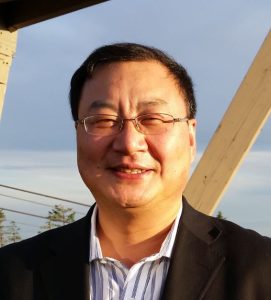
Ke Wu
Dr. Ke Wu (Fellow, IEEE) received the B.Sc. degree (Hons.) in radio engineering from Nanjing Institute of Technology (now Southeast University) in 1982, the D.E.A. degree (Hons.) and the Ph.D. degree (Hons.) in optics, optoelectronics, and microwave engineering, all from the Institut National Polytechnique de Grenoble (INPG) and University of Grenoble, France, respectively in 1984 and 1987. He is currently the Industrial Research Chair in Future Wireless Technologies and Professor of Electrical Engineering with the Polytechnique Montréal (University of Montreal), where he is also the Director of the Poly-Grames Research Center. He was the Canada Research Chair in RF and millimeter-wave engineering and the Founding Director of the Center for Radiofrequency Electronics Research of Quebec. Dr. Wu has graduated over 75 Ph.D. and 95 M.Sc. Students. He has authored/co-authored over 1400 referred papers, and a number of books/book chapters and filed more than 80 patents. Dr. Wu was the General Chair of the 2012 IEEE MTT-S International Microwave Symposium, and the 2016 President of the IEEE Microwave Theory and Techniques Society (MTT-S). He also served as the inaugural representative of the North America in the General Assembly of the European Microwave Association. He was the recipient of many awards and prizes including the 2021 EIC Julian C. Smith Medal, 2022 IEEE MTT-S Outstanding Educator Award, and 2022 IEEE AP-S John Kraus Antenna Award. He was an IEEE MTT-S Distinguished Microwave Lecturer. Dr. Ke Wu is a Fellow of the Canadian Academy of Engineering and the Royal Society of Canada, and a Member of National Academy of Science and Engineering of Germany.
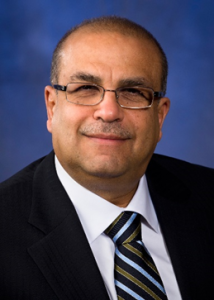
Prof. Raafat Mansour
Raafat Mansour is Professor with the Electrical and Computer Engineering Department, University of Waterloo since January 2000 and has been holding Tier-1 Canada Research Chair (CRC) in Micro-Nano Integrated RF Systems since 2010. He also held the Natural Sciences and Engineering Research Council of Canada (NSERC) Industrial Research Chair (IRC) for two terms, from 2001 to 2005 and from 2006 to 2010. Prior to joining the University of Waterloo, he was with COM DEV, Cambridge, ON, Canada, from 1986 to 1999, where he held various technical and management positions with COM DEV’s Corporate Research and Development Department. He is the Founding Director of the Centre for Integrated RF Engineering (CIRFE) Facility at the University of Waterloo. He holds 46 U.S. and Canadian patents and more than 450 refereed IEEE publications. He has coauthored a Wiley Book on Microwave Filters for Communication Systems and has had seven chapters published in five other books. He has authored or coauthored numerous publications in the areas of filters and multiplexers, high-temperature superconductivity, multifunction reconfigurable microwave and millimeter-wave devices, microelectromechanical systems (MEMS), and phase change materials (PCMs). Dr. Mansour served as the Chair for the Technical Program Committee of the IEEE MTT-S International Microwave Symposium (IMS 2012) and has received several best paper awards and outstanding research performance awards both from COM DEV and the University of Waterloo.
Dr. Mansour is a Fellow of the IEEE, the Canadian Academy of Engineering (CAE) and the Engineering Institute of Canada (EIC). He was a recipient of the 2014 Professional Engineers Ontario (PEO) Engineering Medal for Research and Development and the 2019 IEEE Canada A. G. L. McNaughton Gold Medal Award.
Invited Talks
Sungjoon Lim
Sungjoon Lim (Member, IEEE) received the B.S. degree in electronic engineering from Yonsei University, Seoul, South Korea, in 2002, and the M.S. and Ph.D. degrees in electrical engineering from the University of California, Los Angeles (UCLA), Los Angeles, CA, USA, in 2004 and 2006, respectively.,After a post-doctoral position with the Integrated Nanosystem Research Facility (INRF), University of California at Irvine, Irvine, CA, USA, he joined the School of Electrical and Electronics Engineering, Chung-Ang University, Seoul, in 2007, where he is currently a Professor with the School of Electrical and Electronics Engineering and the Department of Intelligent Semiconductor Engineering, Chung-Ang University. He has authored and coauthored more than 250 international journal articles. He is also interested in the modeling and design of microwave circuits and systems. His research interests include engineered electromagnetic structures (metamaterials, electromagnetic bandgap materials, and frequency selective surfaces), printed antennas, substrate-integrated waveguide (SIW) components, inkjet-printed electronics, and RF MEMS applications.,Prof. Lim received the Institution of Engineering and Technology (IET) Premium Award in 2009, the ETRI journal Best Paper Award in 2014, the Best Paper Award in the 2015 International Workshop on Antenna Technology (iWAT), the Best Paper Award in the 2018 International Symposium on Antennas and Propagation (ISAP), and the CAU Distinguished Scholar from 2014 to 2021.
Qiaowei Yuan
Qiaowei Yuan is a distinguished full professor at the Tohoku Institute of Technology, as well as a specially appointed professor at Tohoku University in Japan. She obtained her PhD degree from Xidian University in China, where she spent two years conducting research at Tohoku University in Japan. Dr. Yuan has extensive experience in antenna engineering, adaptive array antennas, and wireless power transfer (WPT) technology, having worked at Japanese companies and universities. She has co-authored three books on these topics and her work has been recognized with numerous awards, including the Best Paper Award and the Zenichi Kiyasu Award from the Institute of Electronics, Information and Communication Engineers (IEICE) of Japan, as well as several Achievement Awards from IEICE’s Technical Committee on Wireless Power Transfer and Antenna Propagation Committee.
Dr. Yuan has also held various leadership positions, including serving as the secretary of IEICE’s Technical Committee on Wireless Power Transfer, as well as being the vice-chair and chair of IEEE Sendai Women in Engineering (WIE). She is a member of IEEE’s R10 WIE committee, and currently serves as a member of IEEE MTT-C25 and the vice-chair of the Technical Committee on Antennas and Propagation of IEICE.
Naoki Shinohara
Naoki Shinohara received the B.E. degree in electronic engineering, the M.E. and Ph.D (Eng.) degrees in electrical engineering from Kyoto University, Japan, in 1991, 1993 and 1996, respectively. He was a research associate in Kyoto University from 1996. From 2010, he has been a professor in Kyoto University. He has been engaged in research on Solar Power Station/Satellite and Microwave Power Transmission system. He is IEEE Fellow and URSI Fellow. He was IEEE MTT-S Distinguish Microwave Lecturer (2016-18), and is IEEE MTT-S AdCom member (2022-2027), IEEE MTT-S Technical Committee 25 (Wireless Power Transfer and Conversion) former chair and member, IEEE MTT-S MGA (Member Geographic Activities) Region 10 regional coordinator, IEEE WPT Initiative Member, IEEE Wireless Power Transfer Conference & Expo founder and Steering committee member, URSI commission D former chair, the first chair and technical committee member on IEICE Wireless Power Transfer, Japan Society of Electromagnetic Wave Energy Applications former president and adviser, Space Solar Power Systems Society president, Wireless Power Transfer Consortium for Practical Applications (WiPoT) chair, and Wireless Power Management Consortium (WPMc) chair. His books are “Wireless Power Transfer via Radiowaves” (ISTE Ltd. and John Wiley & Sons, Inc.), “Theory and Technology of Wireless Power Transfer: Inductive, Radio, Optical, and Supersonic Power Transfer” (CRC Press), and “Wireless Power Transfer: Theory, Technology, and Applications (2nd Edition)” (IET), and some English, Japanese, and Chinese text books of WPT.
Aurelian Crunteanu
Aurelian Crunteanu (Member, IEEE) received the B.Sc., M.Sc., Ph.D. degrees in physics from the University of Bucharest, Romania, in 1995, 1996, and 2000, respectively, the Ph.D. degree in material science from the University Claude Bernard-Lyon, France, in 2001, and the Habilitation Diploma (H.D.R.) degree from the University of Limoges, with a focus on “Design and development of innovative devices and materials for microelectronics and optics,” in 2014.,In 2001, he was a Postdoctoral Fellow with the Applied Optics Laboratory, École Polytechnique Fédérale de Lausanne (EPFL), Switzerland. Since 2003, he joined the National Centre for Scientific Research (CNRS), France, as a full-time CNRS Researcher with the XLIM Research Institute in Limoges (joint research unit between CNRS and the University of Limoges, France). Since 2019, he has been the CNRS Research Director of XLIM with a research focus on the design, development, and characterization of novel materials with new properties and functionalities (dielectrics, ferroelectrics, phase transition, and phase change materials) as well as their integration into devices for applications in the optical and high frequencies domains. His research interests include developing emerging nanoscale based on oxide materials (multi-composites, 2D, and nanowires) with low energy switching following electrical and/or optical excitations for new paradigms of neuromorphic computing. He has published more than 100 research papers in international peer-reviewed journals and over 300 contributions to international and national peer-reviewed conferences (more than 30 invited lectures), he holds four patents.,Dr. Crunteanu was a member of the Technical Program Committee of European Microwave Week (EuMW 2023 and 2025), IEEE IMWS-AMP, and the International Conference on Advanced Materials (ROCAM). He served as the TPC General Chair for EuMW 2024.
Hugo Espinosa
Dr. Hugo G. Espinosa is the Deputy Dean (Learning and Teaching) for Griffith Sciences. He received his Bachelor’s degree in Electronics and Telecommunications Engineering from the Monterrey Institute of Technology and Higher Education, Mexico; his Master’s degree in Electrical Engineering from the University of São Paulo, Brazil; and his Ph.D. in Electrical Engineering (Summa Cum Laude) from the Technical University of Catalonia, Barcelona, Spain. He has held research appointments as a visiting researcher at the Federal Polytechnic School of Lausanne, Switzerland, and as a Postdoctoral Fellow in the School of Electrical Engineering at Tel Aviv University, Israel.
Dr. Espinosa is a Senior Member of the IEEE and currently chairs the IEEE Microwave Theory and Techniques / Antennas and Propagation (MTT/AP) Joint Chapter of the Queensland Section. He also contributes to the IEEE Antennas and Propagation Society as Chair of the Educational Initiatives Program. In addition, he is an active IEEE STEM Ambassador. In Feb 2025, he chaired the Australian Microwave Symposium (AMS) held at Griffith University’s Gold Coast campus. His service to IEEE has been recognised with the IEEE Queensland Section Outstanding Volunteer Award in 2022.
He currently serves as an Associate Editor for IEEE Antennas and Wireless Propagation Letters and Sports Engineering (Springer). In addition to his academic work, he has been engaged in consultancy projects with defence agencies, law enforcement, the mining sector, and sports organisations.
He Zhu
Dr He Zhu is a currently a Research Scientist in the team of Optical and Terahertz Systems at CSIRO Manufacturing. He received his PhD degree in Electrical Engineering from the School of Information Technology and Electrical Engineering at the University of Queensland in 2017. He was a Postdoctoral Research Fellow and then a Chancellor’s Postdoctoral Research Fellow with the Global Big Data Technologies Centre at University of Technology Sydney from 2017 to 2022. He is selected as an IWY-Research Scientist via the CSIRO Impossible Without You (IWY) campaign and the Space Technology Future Science Platform (FSP) in 2023.
Dr Zhu is currently working on the Space Technology FSP project concerning high-speed Terahertz wireless communication systems for satellites. He is also working on the development of novel quantum sensors using high-temperature superconducting (HTS) MMIC and devices. He has been an active researcher in the field of electromagnetics and microwave engineering since receiving his PhD degree, and his research interests include development of passive and tunable microwave/mm-wave devices, radio frequency integrated circuits and systems, and beam-forming networks for antenna arrays.
Dr Zhu has published top ranking papers in multiple prestigious journals including IEEE Flagship journals in the field of antenna technology, microwave theory and techniques, and circuits and systems. These include IEEE Transactions on Microwave Theory and Techniques, IEEE Transactions on Antennas and Propagation, IEEE Transactions on Circuits and Systems and IEEE Microwave and Wireless Components Letters.
Cristiano Tomassoni
Cristiano Tomassoni received his Ph.D. in Electronics Engineering from the University of Perugia, Perugia, Italy, in 1999. In the same year, he joined the Lehrstuhl für Hochfrequenztechnik, Technical University of Munich, Munich, Germany as a Visiting Scientist, where he worked on the modeling of waveguide structures and devices using the generalized scattering matrix technique. In 2001, he was a Guest Professor at the Fakultät für Elektrotechnik und Informationstechnik, Otto-von-Guericke University, Magdeburg, Germany. In the early stages of his career, he contributed to the enhancement of several analytical and numerical methods for electromagnetic component simulation, including the finite-element method, mode-matching technique, generalized multipole technique, method of moments, transmission-line matrix, and mode matching applied to spherical waves. In 2001, he joined the University of Perugia, where he is currently an Associate Professor and teaches the ‘Electromagnetic Fields’ course and the ‘Advanced Design of Microwave and RF Systems’ course. His main research interests include modeling and designing of waveguide components and antennas, miniaturized filters, reconfigurable filters, dielectric filters, and substrate integrated waveguide filters. He is currently studying the use of Additive Manufacturing (AM) technology for the fabrication of microwave components, considering various technologies such as Stereolithography (SLA), Lithography-based Ceramic Manufacturing (LCM), Selective Laser Melting (SLM), Fused Deposition Modeling (FDM), and PolyJet technology.
Prof. Tomassoni has been elevated to the grade of IEEE Fellow, Class of 2025. He serves as the Chair of the MTT-5 Filters Technical Committee of the IEEE MTT-S. Currently, he is a Distinguished Lecturer for the IEEE MTT-S.
Haiwen Liu
Haiwen Liu (Senior Member, IEEE) was born in 1975. He received the B.S. degree in electronic system and the M.S. degree in radio physics from Wuhan University, Wuhan, China, in 1997 and 2000, respectively, and the Ph.D. degree in microwave engineering from Shanghai Jiaotong University, Shanghai, China, in 2004.,From 2004 to 2006, he was a Research Assistant Professor with Waseda University, Kitakyushu, Japan. From 2006 to 2007, he was a Research Scientist with Kiel University, Kiel, Germany, granted by the Alexander Von Humboldt Research Fellowship. From 2007 to 2008, he was a Professor with the Institute of Optics and Electronics, Chengdu, China, supported by the 100 Talents Program of Chinese Academy of Sciences. From 2009 to 2017, he was the Chair Professor with East China Jiaotong University, Nanchang, China. In 2014, he joined Duke University, Durham, NC, USA, as a Visiting Scholar. In 2015, he joined the University of Tokyo, Tokyo, Japan, as a Visiting Professor, supported by Japan Society for the Promotion of Science (JSPS) Invitation Fellowship. In 2016, he joined the City University of Hong Kong, Hong Kong, as a Visiting Professor. Since 2017, he has been a full-time Professor with Xi’an Jiaotong University, Xi’an, China. He has authored or co-authored more than 100 papers in international and domestic journals and conferences. His current research interests include electromagnetic modeling of high-temperature superconducting circuits, radio frequency and microwave passive circuits, antennas for wireless terminals, radar systems, and radio telescope applications.,Dr. Liu was a recipient of the National Talent Plan, China, in 2017. He has served as the Editor-in-Chief for the International Journal of RF and Microwave Computer-Aided Engineering (Wiley), the Associate Editor for IEEE Access, and the Guest Chief Editor for the International Journal of Antennas and Propagation.
Almudena Suarez Rodriguez
Almudena Suárez is currently a full professor at University of Cantabria (Spain) and head of the research group Microwave Engineering and Radiocommunication Systems. She is a Fellow member of the IEEE since 2012. She was an IEEE Distinguished Microwave Lecturer from 2006 to 2008. She has published 115 papers in IEEE journals, with 79 papers in IEEE Transactions on Microwave Theory and Techniques (IEEE T-MTT). She has authored the book “Analysis and Design of Autonomous Microwave Circuits” (IEEE-Wiley, 2009) and co-authored the book “Stability Analysis of Nonlinear Microwave Circuits” (Artech House, 2003). She has been a member of the TPRCs of IEEE International Microwave Symposium (IMS) since 2004 and European Microwave Week (EuMW) since 2014. She was a member of the Board of Directors of European Microwave Association (EuMA) from 2012 to 2020. She was the Publication Officer of EuMA from 2021 to 2023. She received the Research Award of the Social Council of the University of Cantabria in 2021. She was the coordinator of the Communications and Electronic Technology Area for the Spanish National Evaluation and Foresight Agency (ANEP) from 2009 to 2013. She was the chair of the 2014 and 2015 editions of IEEE Topical Conference on RF/Microwave Power Amplifiers (PAWR), in Newport Beach and San Diego. She was the General TPC Chair of EuMW 2018. Prof. Suárez was the Editor-in-Chief of the International Journal of Microwave and Wireless Technologies from Cambridge University Press journals (IJMWT) from 2013 to 2018. She has been an Associate Editor for IEEE Microwave Magazine since 2014 and was an Associate Editor for IEEE T-MTT in 2019-2022. She was been the Chair of the IEEE Subcommittee for the Best paper Award in IEEE Microwave Magazine from 2017 to 2021. Since 2023 she is the Editor-in-Chief of IEEE T-MTT.
Yi Wang
Dr Wang is Head of the Emerging Device Technology (EDT) Research Lab, and the Academic Lead of both the Engineering Cleanroom and the THz Vector Network Analyser Facility. He served as the TPC Chair of the 2021 European Microwave Conference.
He teaches courses in electronics and electromagnetism. His research focuses on microwave and terahertz passive device technologies, with an emphasis on new manufacturing techniques, materials, and circuit design methods. His research has been primarily funded by UK EPSRC, the European Space Agency, the EU, and industry. He is also an Associate Editor for IET Microwaves, Antennas & Propagation.
Hung-Wei Wu
Hung-Wei Wu was born in Taipei, Taiwan, in 1978, and the Ph.D. degree from the Institute of Microelectronics, National Cheng Kung University, Taiwan, in 2007. From 2009 to 2020, he was with the Kun Shan University, Tainan, Taiwan, Dean of Creative Media, Director of the Innovation Startup and Incubation Center, and Full Professor of the Department of Computer and Communication. Since 2021, he has been with Feng Chia University, Taichung, Taiwan. His research interests include microwave filter design, Low-K material for mm-wave applications, optoelectronics semiconductor thin films engineering, bioelectronics for rare cell screening, and mm-wave biosensors for identifying cancer cells.
Dr. Wu is a Senior Member of IEEE and Member of the European Microwave Association (EuMA), the Institution of Engineering and Technology (IET), the IEEE MTT-S Technical Committee Member in MTT-28, the associate editor of IEEE Transactions on Microwave Theory and Techniques. He also serves on the Technical Program Committee, the Organizing Chair of workshops of the IEEE Bio-Wireless Conference, the Technical Paper Review Committee Member of the IEEE MTT-S International Microwave Symposium, and Associate Editor of the Annual International Conference of the IEEE Engineering in Medicine and Biology Society. Furthermore, he has also served as an Associate Editor for the International Journal of Microwave and Wireless Technologie, the Nano-Biomedicine Technical Committee Member in the IEEE Nanotechnology Council (NTC), IEEE EMB-S Technical Committee Co-Chair on Bionanotechnology and BioMEMS, and the IEEE Region-10 Conference and Technical Seminar Committee. In addition, he has served as an invited speaker at many IEEE-related conferences, such as IEEE MTT-S IMS, IEEE MTT-S EuMC, IEEE MTT-S APMC, IEEE MTT-S RWS, IEEE MTT-S APCAP…etc.
Malgorzata Celuch
Malgorzata Celuch received the International Baccalaureate (with honors) at the United World College of the Atlantic, South Glamorgan, U.K., and the M.Sc. (honors) and Ph.D. (honors) degrees from the Warsaw University of Technology, Warsaw, Poland, in 1988 and 1996, respectively.,Since 1996, she has been an Assistant Professor with the Warsaw University of Technology. She coauthored QuickWave software. She was co-founder and Vice-President of QWED. She has authored over 150 publications, including 20 journal papers and three book chapters. She has been a Reviewer for the IEEE Transactions on Microwave Theory and Techniques, IEEE Transactions on Antennas and Propagation, IEEE Microwave and Wireless Components Letters and the IEEE Antennas and Propagation Society Magazine. Her main fields of research are electromagnetic modeling of microwave circuits and numerical methods for computational electromagnetics, including conformal FDTD methods, new applications of FDTD with enthalpy-dependent material parameters, and frequency-domain parameter extraction from FDTD simulations.,Dr. Celuch has been a reviewer for the Journal of Microwave Power and Electromagnetic Energy, Applied Computational Electromagnetics Society Journal, International Journal of Infrared and Millimeter Waves, Physica Status Solidi B, Computer Physics Communications, and Wydawnictwa Komunikacji i Lacznosci. She has been a Technical Program Committee (TPC) member of the IEEE Microwave Theory and Techniques Society (IEEE MTT-S) International Microwave Symposium (IMS) since 2002. She is the founder and chair of a new TPRC sub-committee devoted to microwave power applications. She is a member of the Microwave Materials and Applications Conference MMA, IET CEM, and ANTEM. She has been an invited speaker, session organizer, and session chair at numerous conferences.
Withawat Withayachumnankul
Withawat Withayachumnankul earned his bachelor’s and master’s degrees in electronic engineering from King Mongkut’s Institute of Technology Ladkrabang (KMITL), Thailand, in 2001 and 2003, respectively. He later obtained a doctorate degree in electrical engineering from the University of Adelaide, Australia, in 2010. Following the completion of his doctoral study, Dr. Withayachumnankul was honoured with a prestigious 3-year Australian Research Council (ARC) Postdoctoral Fellowship in 2010. In 2015, he further expanded his global research experience as a Research Fellow of the Japan Society for the Promotion of Science (JSPS) at Tokyo Institute of Technology.
Dr. Withawat Withayachumnankul serves as a Professor at the University of Adelaide and is an Australian Research Council (ARC) Future Fellow. He is the Founding Leader of the Terahertz Engineering Laboratory, where he currently mentors around 10 PhD students and 3 postdoctoral researchers. Since 2017, he has also been a Visiting Researcher at Osaka University. Demonstrating strong service to the academic community, Dr. Withayachumnankul served on the ARC College of Experts from 2023 to 2025. He also holds the position of Track Editor for the IEEE Transactions on Terahertz Science and Technology. His scholarly output includes more than 130 journal publications. In recent years, he has led four ARC Discovery Projects, attracting over AUD 3.5 million in competitive research funding. His research spans terahertz integration, metasurfaces, antennas, radar, communications, and non-destructive evaluation. Among his recognitions, he received the IRMMW‑THz Society Young Scientist Award in 2020 and is an IEEE Fellow (Class of 2026) as well as an Optica Fellow (Class of 2024).
Rodica Ramer
Rodica Ramer (Senior Member, IEEE) received the Ph.D. degree in solid-state physics from the University of Bucharest, Bucharest, Romania.,In 1993, she joined the School of Electrical Engineering and Telecommunications at the University of New South Wales Sydney, where she is currently a Full Professor of microwave engineering. She held research positions at various universities worldwide, including the University of Alabama, Huntsville, AL, USA. Colorado State University, Fort Collins, CO, USA, and the School of Electrical Engineering, University of Oklahoma, Norman, OK. She was a Visiting Professor at Microwave Laboratories, CSIRO, Chiba University, Japan, and the Electromagnetics and Antenna Laboratories, National Taiwan University, Taipei, Taiwan. She has authored or co-authored more than 400 publications, including a Pearson Education book. Her main research interests include the development of novel microwave and millimeter-wave devices for wireless communications applications utilizing various technologies, such as waveguide, microstrip, coplanar waveguide, substrate integrated waveguide technology, low temperature co-fired ceramic, RF MEMS, phase-change material, AM, and novel materials for the fabrication of microwave components.
Kang Zhou
Kang Zhou (Member, IEEE) received the B.Eng. degree in electronic and information engineering and the Ph.D. degree in electronic science and technology from Nanjing University of Science and Technology (NJUST), Nanjing, China, in 2012 and 2019, respectively. From 2019 to 2022, he was a Post-Doctoral Fellow with Poly-Grames Research Center, Polytechnique Montreal, University of Montreal, Montreal, QC, Canada. From 2022 to 2023, he was an Assistant Professor with Eastern Institute of Technology, Ningbo, China, where he has been an Associate Professor since November 2023. He is also the doctoral supervisor with Shanghai Jiao Tong University and University of Science and Technology of China since 2024. He has authored/co-authored more than 60 articles in peer-reviewed international journals and conference proceedings with a total citation of 1500 (Google Scholar). He also holds one U.S. patent. His current research interests involve microwave and millimeter-wave multiband/multifunction filtering devices and antennas, terahertz integrated circuits and systems. Dr. Zhou is a Member of the IEEE Microwave Theory and Technology Society (MTT-S) and IEEE Antennas and Propagation Society (AP-S), a Senior Member of the Chinese Institute of Electronics (CIE) and International Union of Radio Science (URSI). He is an affiliate Technical Committee Member of the IEEE MTT-S TC-4 Microwave Passive Components and Transmission Line Structures. He received the Excellent Young Scientists Fund from the National Natural Science Foundation of China (Overseas) in 2023. He was a recipient of the Outstanding Doctoral Dissertation Award of NJUST in 2020. He also serves as a technical reviewer for more than 50 internationally referred journals and conferences.
Xiaoke Yi
Professor Xiaoke Yi is Professor and Director of the Photonics Research Group in the School of Electrical and Computer Engineering. Her research has made key contributions to microwave photonics, photonic signal processing and sensing. Her research interests include integrated microwave photonics, sensors, photonic signal processing, photonic integrated circuits, nanophotonics and hardware for artificial intelligence (AI) acceleration.
Her current research focuses on developing novel signal processing and sensing technologies that enable high-speed, wideband, low-power, and scalable solutions for data-intensive and data-driven communication, sensing, and AI applications. She was an Australian Research Council Queen Elizabeth II Fellow and was a recipient of the Engineers Australia Most Innovative Engineer award. Xiaoke Yi is a Fellow of Optica (formerly the Optical Society of America) and a Fellow of the Royal Society of New South Wales.
Shengjian Chen
Dr. Chen received the M.E. and Ph.D. degrees in electrical and electronic engineering from The University of Adelaide, Australia, in 2013 and 2017 respectively. From 2017 to 2021, he was a postdoctoral researcher and a lecturer with the School of Electrical and Electronic Engineering at The University of Adelaide. He joined the College of Science and Engineering at Flinders University, Australia, as a lecturer in 2022.
His current research interests include antenna design and engineering, wearable technology, microwave absorbers, electromagnetic structures using advanced materials, and direction-finding techniques.
Dr. Chen received scholarships including the Australian Postgraduate Award 2013 and the Simon Rockliff Scholarship 2015. He was also the recipient of several awards including the Young Scientist Best Paper Award at the International Conference on Electromagnetics in Advanced Applications (ICEAA) 2015, the Young Scientist Best Paper Award and Travel Bursary Award at ICEAA 2016, an Honorable Mention at IEEE AP-S Symposium on Antennas and Propagation (APS/URSI) 2017, a CST University Publication Award 2017, the Best Paper Award at IEEE Asia-Pacific Microwave Conference 2021, and the Best Paper Award at International Symposium of Antennas and Propagation 2024.
Dr. Chen was a Top Reviewer for IEEE Transactions on Antennas and Propagation in 2021 and 2023 and for IEEE Antennas and Wireless Propagation Letters in 2024. He is an Associated Editor of IEEE Antennas and Wireless Propagation Letters. He was the Chair of the IEEE South Australia Joint Chapter on Microwave Theory and Techniques (MTT) & Antennas and Propagation (AP) from 2019 to 2020, and serves again since 2023.
Mohammad Samizadeh Nikoo
Mohammad Samizadeh Nikoo is an Assistant Professor in the School of Electrical and Electronic Engineering (EEE) at Nanyang Technological University (NTU), Singapore, where he leads the Innovative Electronic and Electromagnetic Devices Laboratory (i-Lab). His research focuses on developing novel device concepts to address the emerging challenges of information technologies.
He received his Ph.D. in Electrical Engineering from EPFL, Switzerland, where he pioneered new methods of integrating electron dynamics into advanced device architectures. Before joining NTU, he was a research fellow at ETH Zurich, where he developed unconventional devices using standard silicon processes. His major works have been published in leading journals such as Nature and Nature Electronics.
In recognition of his innovative research, he has received several awards and fellowships, including the Nanyang Assistant Professorship Award and the National Research Foundation (NRF) Fellowship in Singapore.
Weijie Gao
Weijie Gao (Member, IEEE) received the master’s degree in telecommunications from the University of New South Wales, Sydney, Australia, in 2016, and the Ph.D. degree in electrical and electronic engineering from The University of Adelaide, Adelaide, SA, Australia, in 2022. Since 2022, he has joined Nagatsuma Laboratory, Osaka University, Osaka, Japan, as a Postdoctoral Fellow, supported by the Beyond-5G R&D Promotion Program from the National Institute of Information and Communications Technology (NICT), Japan and the Core Research for Evolutional Science and Technology (CREST) program of the Japan Science and Technology Agency (JST). His research interests include advancing terahertz integrated devices and communication systems for beyond-5G applications, including the development of terahertz integrated passive components, hybrid and heterogeneous terahertz integration technologies, and terahertz wireless and on-chip communications systems. Dr. Gao was the recipient of the Student Prize at the Asia-Pacific Microwave Conference (APMC) in 2021, and his thesis was awarded the Doctoral Research Medal, the Gertrude Rohan Memorial Prize, and the Dean’s Commendation Doctoral Thesis Excellence.
Safumi Suzuki
Safumi Suzuki (Member, IEEE) received the B.E. degree in electrical and electronic engineering and the M.E. and D.E. degrees in electronics and applied physics from the Tokyo Institute of Technology, Tokyo, Japan, in 2005, 2007, and 2009, respectively.,From 2009 to 2014, he was an Assistant Professor with the Department of Electronics and Applied Physics, from 2014 to 2016, an Associate Professor with the Department of Physical Electronics, and from 2016 to 2024, an Associate Professor with the Department of Electrical and Electronic Engineering, Tokyo Institute of Technology, respectively. Since 2024, he has been a Professor with the Institute of Integrated Research, Institute of Science Tokyo.,His research interests include terahertz electronic devices and applications.
Geng-Bo Wu
Geng-Bo Wu (Senior Member, IEEE) received the B.Eng. and M.Sc. degrees from the University of Electronic Science and Technology of China, Chengdu, China, in 2015 and 2018, respectively, and the Ph.D. degree from the City University of Hong Kong (CityU), Hong Kong, in 2021.,From 2021 to 2023, he was a Post-Doctoral Research Fellow with the State Key Laboratory of Terahertz and Millimeter Waves (SKLTMW), CityU. He is currently an Assistant Professor with the Department of Electrical Engineering, CityU. He is a member at CityU and a Visiting Professor at the University of Technology Sydney, Ultimo, NSW, Australia, in 2025. He has published more than 60 peer-reviewed articles in prestigious journals, including Nature, Nature Electronics, Nature Communications, Science Advances, Proceedings of the IEEE, and IEEE Transactions series. His research interests include millimeter-wave/terahertz antennas, reconfigurable intelligent surfaces, spatiotemporal modulation technology, and integrated sensing and communications.,Dr. Wu has been serving as a Committee Member for the IEEE Hong Kong AP/MTT Joint Chapter since 2022. He was a recipient of Gold Model with Congratulations of the Jury and Gold Model in the 49th and 48th International Exhibition of Inventions Geneva in 2024 and 2023, the IEEE Antennas and Propagation Society Fellowship (APSF) in 2022, the Best Student Paper Award Finalists in the 14th European Conference on Antennas and Propagation (EuCAP) in 2020, the Honorable Mention Award in IEEE AP-S/URSI in 2020, and the Best Student Presenter Award in the 2019 EE Student Research Symposium, CityU.
Daniel Headland
Daniel Headland earned his doctorate in Electrical and Electronic Engineering in 2017 at The University of Adelaide in Australia. His thesis received distinguished awards such as the University Doctoral Research Medal and a Dean’s Commendation for Doctoral Thesis Excellence. Thereafter, Dr Headland obtained a competitive Australian Endeavour Research Fellowship to undertake abroad, at The University of Wuppertal in Germany. From 2018 to 2021, Dr Headland was a Specially Appointed Researcher at Osaka University under the Core Research for Evolutional Science and Technology (CREST) program of the Japan Science and Technology. At the conclusion of his time in Japan, Dr Headland’s distinguishment as an early career researcher was recognized with a competitive three-year CONEX-Plus research Fellowship under the Marie Skłodowska-Curie Actions framework to undertake at Universidad Carlos III de Madrid, in Spain.As of late 2024 Dr Headland undertaken Discovery Early Career Research Award (DECRA) fellowship. He is also a recipient of the 2025 IEEE Antennas and Propagation Society’s Young Professional Ambassador award.
Peng Wu
Wu Peng is a Research Professor and PhD supervisor at the Aerospace Information Research Institute (AIR), Chinese Academy of Sciences (CAS). He is a recipient of the CAS Hundred Talents Program and a member of the Satellite Communications Committee of the China Institute of Communications. His research focuses on millimeter-wave and terahertz microsystems and their applications. He has led national science and technology innovation projects, CAS initiatives, and local government-funded projects, including ultra-wideband antenna systems for satellite signals and reconfigurable radar systems. His research outcomes have been applied in fields such as communications and sensing.
Zhi Hao Jiang
Zhi Hao Jiang was born in Nanjing, China, in 1986. He received the B.S. degree in radio engineering from Southeast University, Nanjing, in 2008, and the Ph.D. degree in electrical engineering from The Pennsylvania State University, University Park, State College, PA, USA, in 2013. From 2013 to 2016, he was a Post-Doctoral Fellow with the Computational Electromagnetics and Antennas Research Laboratory, Department of Electrical Engineering, The Pennsylvania State University. He is currently a Professor with the State Key Laboratory of Millimeter Waves, School of Information Science and Engineering, Southeast University.
Dr. Jiang has authored or co-authored more than 100 papers in peer-reviewed journals, over 70 papers in conference proceedings, as well as 9 book chapters. He has also co-edited two books: Electromagnetic Vortices: Wave Phenomena and Engineering Applications (Wiley/IEEE Press, 2021), Electromagnetics of Body-Area Networks: Antennas, Propagation, and RF Systems (Wiley/IEEE Press, 2016). He holds 7 granted U.S. patents and 15 granted Chinese patents. He has served as the TPC Co-Chair or a TPC Member for multiple international conferences. He was a recipient of the Outstanding Youth Scholar of the National Science Foundation of China in 2021, the IEEE Microwave Prize in 2021, the Young Scientist Award at the URSI-GASS in 2020, the Young Scientist Award at the 2019 ACES-China Conference, the High-Level Innovative and Entrepreneurial Talent presented by Jiangsu Province, China, in 2017, the Thousands of Young Talents presented by the China government in 2016, the 2012 A. J. Ferraro Outstanding Doctoral Research Award in Electromagnetics, and several best (student) paper awards at international conferences. He is a Senior Member of CIE, serves as a member of the IEEE AP-S New Technology Directions Committee (NTDC), the Associate Editor of IET Communications, was a Guest Editor of the International Journal of RF and Microwave Computer-Aided Engineering.
Debabrata K. Karmokar
Debabrata K. Karmokar (Senior Member, IEEE) received the B.Sc. degree in electrical and electronic engineering (EEE) from the Khulna University of Engineering and Technology (KUET), Khulna, Bangladesh, in 2007, and the Ph.D. degree in electronic engineering from Macquarie University, Sydney, NSW, Australia, in 2016.,In 2007, he joined KUET as a Lecturer, where he was promoted to Assistant Professor and also served as an Assistant Director for the Students’ Welfare. From 2012 to 2015, he was a Casual Academic, a Research Assistant, and the Secretary of the IEEE Student Branch at Macquarie University, Sydney, NSW, Australia. From 2016 to 2019, he was a Post-Doctoral Research Associate with the Global Big Data Technologies Centre (GBDTC), University of Technology Sydney (UTS), Ultimo, NSW, Australia. From 2019 to 2020, he was a Lecturer with the School of Engineering, Macquarie University. In 2020, he joined the University of South Australia (UniSA), Mawson Lakes, SA, Australia, where he is currently a Program Director of UniSA STEM.,Dr. Karmokar is serving as the Counselor for the IEEE UniSA Student Branch. He was a recipient of several scholarships and research grants. In addition, he received a number of awards, including the Young Scientist Award from the Venus International Foundation in 2018 and the URSI Young Scientist Award in 2019. He is serving as an Associate Editor for IEEE Access and a Guest Editor of Electronics (MDPI).
Changzhi Li
Changzhi Li (Fellow, IEEE) is currently a Full Professor and the Whitacre Endowed Chair in electrical and computer engineering at Texas Tech University, Lubbock, TX, USA. His research interests are microwave/millimeter-wave technology for healthcare, security, energy efficiency, structural monitoring, and human–machine interface.,Dr. Li is a Fellow of the National Academy of Inventors (NAI) and American Institute for Medical and Biological Engineering (AIMBE). He was an IEEE Microwave Theory and Techniques Society (IEEE MTT-S) Distinguished Microwave Lecturer, in the Tatsuo Itoh class of 2022–2024, and the General Chair of the 2024 IEEE Radio Wireless Week (RWW) in San Antonio, TX, USA. He was a recipient of the IET A. F. Harvey Prize, the IEEE MTT-S Outstanding Young Engineer Award, the IEEE Sensors Council Early Career Technical Achievement Award, the ASEE Frederick Emmons Terman Award, the IEEE-HKN Outstanding Young Professional Award, and the NSF Faculty CAREER Award.
Robert H. Caverly
Dr. Robert H. Caverly received his Ph.D. degree in electrical engineering from The Johns Hopkins University, Baltimore, MD, in 1983. He has been a faculty member at Villanova University in the Department of Electrical and Computer Engineering since 1997 and is a Full Professor. Previously, he was a Professor for more than 14 years at the University of Massachusetts Dartmouth. Dr. Caverly’s research interests are focused on the characterization of semiconductor devices such as PIN diodes and FETs in the microwave and RF control environment. He has published more than 100 journal and conference papers and is the author of two books, Microwave and RF Semiconductor Control Device Modeling and CMOS RFIC Design Principles from Artech House. An IEEE Life Fellow, Dr. Caverly is the current Editor-in-Chief of the IEEE Microwave Magazine and a member of the MTT-S AdCom, and was the General Chair of the 2020 IEEE Radio and Wireless Week.
Qingxin Chu
Professor Chu Qing-Xin was born in Baoji, Shaanxi, China in 1958. He received the B.S., M.S. and Ph. D. degrees from XidianUniversity, Xi’an, Shaanxi, China, in 1982, 1987 and 1994 respectively. From 1982 to 2003, he had been worked in School of Electronic Engineering,XidianUniversity. During this period, he was promoted to Assistant Professor, Associate Professor, Full Professor and Doctoral Tutor in 1983, 1992, 1997 and 1999 respectively. In 2004, he was introduced into South China University of Technology as the academic leader. From 1995 to 2008, He has been invited to visit The Chinese University of Hong Kong, Nanyang Technological University, Singapore, Okayama University, Japan and Nantes Institute of Integrate Technology, France as research associate, research fellow and visiting professor respectively. He has taught more than ten undergraduate and postgraduate courses, which were highlight and well received by students. The course of RF Circuit of Antenna was elected Guangdong Excellent Course in 2007. From 2004, He has published over 200 papers onexcellent academic journals and conferences at home and abroad, and has taken charge of more than 10 research projects, of which the funding is more than six million. His current research interests include analytical and numerical techniques in electromagnetics, RF/microwave integrated circuits, RF/microwave filters, active integrated antennas, spatial power combining array, and antennas in mobile communication.
Konstanty Bialkowski
Konstanty Bialkowski (Member, IEEE) received the dual B.Eng./B.Sc. (Hons.) and Ph.D. degrees in wireless communications from the University of Queensland, Brisbane, QLD, Australia, in 2003 and 2008, respectively. He was a Research Engineer with National ICT Australia, Australia, prior to joining the School of Information Technology and Electrical Engineering with the University of Queensland in 2009, where he is currently a Associate Professor. His research interests include wireless sensing in the applications of near-field biomedical imaging, and defence and transport areas. He was awarded a Mid-Career Advance Queensland Research Fellowship (AQRF) Award in 2017, the Early CAREER Researcher Award at the 2011 Australian Communication Theory Workshop and Highly Commended Presentation Award at the 2005 Australian Symposium on Antennas. He is currently an Associate Editor for the IEEE Journal of Electromagnetics, RF and Microwaves in Medicine and Biology (JERM), and a Guest Editor of the Microwave and Optical Technology Letters.
Microwave Panel Discussion
Kamran Ghorbani
Kamran Ghorbani (M’96) received the B.Eng (Hons.) and Ph.D. degree from RMIT University, Melbourne, VIC, Australia, in 1994 and 2001, respectively. From Nov. 1994 to 1996, he was a graduate RF Engineer with AWA Defence Industries working on early warning radar systems. In June 1996, he joined RMIT University to pursue his Ph.D. studies. From Dec. 1999 to March 2001, he was a Senior RF Engineer with Tele-IP working on VHF transceivers for commercial aircraft. He joined the Department of Communication and Electronic Engineering (now the School of Electrical and Computer Engineering) at RMIT University in 2001 as a continuing Academic. Prof. Ghorbani is currently the Director of the Communication Technologies Research Centre, RMIT University. He is responsible for strategic planning and managing the research center. His research interests include, dielectric measurements, composite material structures, frequency selective surfaces, metamaterials, RF energy harvesting, radar systems, ferroelectric devices and phased array antennas.
Prof. Ghorbani was the Chair of Asia Pacific Microwave Conference APMC2011, which was held in Melbourne, Australia. He was the Co-Chair of Technical Program Committee for IEEE International Microwave and RF Conference, IMaRC2014, which was held in India. He was the Chair of first Australian Microwave Symposium, AMS2014, which was held in Melbourne, Australian. He is the Chair of Technical Program Committee of the Asia Pacific Microwave Conference APMC2016, which is going to be held in India. He is a member of IEEE MTT-S Meetings and Symposia Committee (AdCom sub-committee).
Ke Wu
Dr. Ke Wu (Fellow, IEEE) received the B.Sc. degree (Hons.) in radio engineering from Nanjing Institute of Technology (now Southeast University) in 1982, the D.E.A. degree (Hons.) and the Ph.D. degree (Hons.) in optics, optoelectronics, and microwave engineering, all from the Institut National Polytechnique de Grenoble (INPG) and University of Grenoble, France, respectively in 1984 and 1987. He is currently the Industrial Research Chair in Future Wireless Technologies and Professor of Electrical Engineering with the Polytechnique Montréal (University of Montreal), where he is also the Director of the Poly-Grames Research Center. He was the Canada Research Chair in RF and millimeter-wave engineering and the Founding Director of the Center for Radiofrequency Electronics Research of Quebec. Dr. Wu has graduated over 75 Ph.D. and 95 M.Sc. Students. He has authored/co-authored over 1400 referred papers, and a number of books/book chapters and filed more than 80 patents. Dr. Wu was the General Chair of the 2012 IEEE MTT-S International Microwave Symposium, and the 2016 President of the IEEE Microwave Theory and Techniques Society (MTT-S). He also served as the inaugural representative of the North America in the General Assembly of the European Microwave Association. He was the recipient of many awards and prizes including the 2021 EIC Julian C. Smith Medal, 2022 IEEE MTT-S Outstanding Educator Award, and 2022 IEEE AP-S John Kraus Antenna Award. He was an IEEE MTT-S Distinguished Microwave Lecturer. Dr. Ke Wu is a Fellow of the Canadian Academy of Engineering and the Royal Society of Canada, and a Member of National Academy of Science and Engineering of Germany.
Quan Xue
Professor Xue began his professional career in the Universisty of Electronic Science and Technology of China (UESTC) in 1993 as a Lecturer, immidately after he obtained his Ph.D. In 1997, he became a Professor in UESTC then moved to Chinese University of Hong Kong to work as a Research Associate and then a Research Fellow. In 1999, he joined the City University of Hong Kong as Senior Scientific Officer, and then promoted as Assciate Professor, Professor, and Chair Professor of Microwave Engineering. He also served the University as the Associate Vice President, the Director of Information and Communication Technology Center, and the Deputy Director of the State Key Lab of Millimeter Waves (Hong Kong). In 2017, he joined South China University of Technology. Now he is a Professor and serves as the Dean of the School of Electronics and Information Engineering, the Dean of the School of Microelectronics, and the Director of the Guangdong Key Laboratory of Terahertz and Millimeter Waves. He also serves as the Chief Scientist of Antenna in the 2012 Labs of Huawei Technologies. His is a member of Chinese National 6G Technology General Expert Group. He has published over 400 internationally refereed journal papers and over 150 international conference papers. In addition, he has held more than 50 Chinese patents and more than 30 granted US patents. Prof. XUE’s research interests include microwave/millimeter-wave/THz passive components, active components, antenna, microwave monolithic integrated circuits, etc.
Anding Zhu
Anding Zhu received the Ph.D. degree in electronic engineering from University College Dublin (UCD), Ireland, in 2004. He is currently a Full Professor in the School of Electrical and Electronic Engineering in UCD. His research interests are in the area of nonlinear modelling and characterisation of RF circuits and systems with a particular emphasis on digital linearisation of RF power amplifiers for wireless communications. He has published over 200 peer-reviewed papers and received research funding from various sources including awards from Science Foundation Ireland (SFI), European Space Agency (ESA), Enterprise Ireland (EI) and industry donations.
Prof. Zhu is an IEEE Fellow. He served as the Secretary of Administrative Committee (AdCom) of the IEEE Microwave Theory and Technology Society (MTT-S) in 2018 and has been an Elected Member of MTT-S AdCom since 2019. He currently chairs the Budget Committee and is President-Elect. He will serve as President of MTT-S in 2026. He also served as Chair of the MTT-S Microwave High-Power Techniques Committee (TC-12) from 2020 to 2021. He was General Chair of 2018 IEEE MTT-S International Microwave Workshop Series on 5G Hardware and System Technologies (IMWS-5G) and Guest Editor of IEEE Transactions on Microwave Theory and Techniques on 5G Hardware and System Technologies. Prof. Zhu was a recipient of 2021 IEEE MTT-S Microwave Prize and served as a Track Editor of IEEE Transactions on Microwave Theory and Techniques from 2020 to 2022. He is currently an Associate Editor of IEEE Microwave Magazine. Prof. Zhu was also a Member of the IEEE Future Directions Committee from 2020 to 2023.
Almudena Suarez Rodriguez
Almudena Suárez is currently a full professor at University of Cantabria (Spain) and head of the research group Microwave Engineering and Radiocommunication Systems. She is a Fellow member of the IEEE since 2012. She was an IEEE Distinguished Microwave Lecturer from 2006 to 2008. She has published 115 papers in IEEE journals, with 79 papers in IEEE Transactions on Microwave Theory and Techniques (IEEE T-MTT). She has authored the book “Analysis and Design of Autonomous Microwave Circuits” (IEEE-Wiley, 2009) and co-authored the book “Stability Analysis of Nonlinear Microwave Circuits” (Artech House, 2003). She has been a member of the TPRCs of IEEE International Microwave Symposium (IMS) since 2004 and European Microwave Week (EuMW) since 2014. She was a member of the Board of Directors of European Microwave Association (EuMA) from 2012 to 2020. She was the Publication Officer of EuMA from 2021 to 2023. She received the Research Award of the Social Council of the University of Cantabria in 2021. She was the coordinator of the Communications and Electronic Technology Area for the Spanish National Evaluation and Foresight Agency (ANEP) from 2009 to 2013. She was the chair of the 2014 and 2015 editions of IEEE Topical Conference on RF/Microwave Power Amplifiers (PAWR), in Newport Beach and San Diego. She was the General TPC Chair of EuMW 2018. Prof. Suárez was the Editor-in-Chief of the International Journal of Microwave and Wireless Technologies from Cambridge University Press journals (IJMWT) from 2013 to 2018. She has been an Associate Editor for IEEE Microwave Magazine since 2014 and was an Associate Editor for IEEE T-MTT in 2019-2022. She was been the Chair of the IEEE Subcommittee for the Best paper Award in IEEE Microwave Magazine from 2017 to 2021. Since 2023 she is the Editor-in-Chief of IEEE T-MTT.
Qiaowei Yuan
Qiaowei Yuan is a distinguished full professor at the Tohoku Institute of Technology, as well as a specially appointed professor at Tohoku University in Japan. She obtained her PhD degree from Xidian University in China, where she spent two years conducting research at Tohoku University in Japan. Dr. Yuan has extensive experience in antenna engineering, adaptive array antennas, and wireless power transfer (WPT) technology, having worked at Japanese companies and universities. She has co-authored three books on these topics and her work has been recognized with numerous awards, including the Best Paper Award and the Zenichi Kiyasu Award from the Institute of Electronics, Information and Communication Engineers (IEICE) of Japan, as well as several Achievement Awards from IEICE’s Technical Committee on Wireless Power Transfer and Antenna Propagation Committee.
Dr. Yuan has also held various leadership positions, including serving as the secretary of IEICE’s Technical Committee on Wireless Power Transfer, as well as being the vice-chair and chair of IEEE Sendai Women in Engineering (WIE). She is a member of IEEE’s R10 WIE committee, and currently serves as a member of IEEE MTT-C25 and the vice-chair of the Technical Committee on Antennas and Propagation of IEICE.
Wenquan (Cherry) Che
Wenquan Che received the B.Sc. degree from the East China Institute of Science and Technology, Nanjing, China, in 1990, the M.Sc. degree from the Nanjing University of Science and Technology, Nanjing, in 1995, and the Ph.D. degree from the City University of Hong Kong (CITYU), Hong Kong, in 2004. In 1999, she joined CITYU as a Research Assistant. In 2002, she joined the Polytechnique de Montréal, Montréal, QC, Canada, as a Visiting Scholar. From 2007 to 2008, she conducted academic research at the Institute of High Frequency Technology, Technische Universität München. During the summers of 2005-2006 and 2009-2012, she was with CITYU, as a Research Fellow and a Visiting Professor. Since 2013, she has been the Executive Dean of the College of Elite Education, Nanjing University of Science and Technology. She is currently a Professor with the South China University of Technology, Guangzhou, China.
Dr. Che was a recipient of the 5th China Young Female Scientists Award, in 2008. She received the 2007 Humboldt Research Fellowship presented by the Alexander von Humboldt Foundation of Germany and the Distinguished Young Scientist award by the National Natural Science Foundation Committee of China, in 2012.
She has authored or co-authored over 150 internationally referred journal papers and over 70 international conference papers. She holds over 10 Chinese patents. Her research interests include microwave antenna technology, planar/coplanar circuits and subsystems in RF/microwave frequency, microwave monolithic integrated circuits, and medical application of microwave technology. Dr. Che currently serves as an Elected Member for the IEEE MTT-S AdCom and the Representative for MTT-S at the IEEE Women in Engineering Society.
Rodica Ramer
Prof. Rodica Ramer received a B.E., M.E., and PhD degrees in solid-state physics from the University of Bucharest. She has been with the University of New South Wales Sydney, Australia, where she is currently a full professor and the head of the microelectronics, and micro- nano-systems research discipline. She was also with the University of Alabama at Huntsville and Colorado State University, USA, and the University of Chiba Japan. Her research area includes microwave and millimeter-wave circuits, substrate-integrated waveguides, antennas, and novel materials technologies for 5G and 6G mobile communications applications.
Xiaoke Yi
Professor Xiaoke Yi is Professor and Director of the Photonics Research Group in the School of Electrical and Computer Engineering. Her research has made key contributions to microwave photonics, photonic signal processing and sensing. Her research interests include integrated microwave photonics, sensors, photonic signal processing, photonic integrated circuits, nanophotonics and hardware for artificial intelligence (AI) acceleration.
Her current research focuses on developing novel signal processing and sensing technologies that enable high-speed, wideband, low-power, and scalable solutions for data-intensive and data-driven communication, sensing, and AI applications. She was an Australian Research Council Queen Elizabeth II Fellow and was a recipient of the Engineers Australia Most Innovative Engineer award. Xiaoke Yi is a Fellow of Optica (formerly the Optical Society of America) and a Fellow of the Royal Society of New South Wales.
Malgorzata Celuch
Malgorzata Celuch received the International Baccalaureate (with honors) at the United World College of the Atlantic, South Glamorgan, U.K., and the M.Sc. (honors) and Ph.D. (honors) degrees from the Warsaw University of Technology, Warsaw, Poland, in 1988 and 1996, respectively.,Since 1996, she has been an Assistant Professor with the Warsaw University of Technology. She coauthored QuickWave software. She was co-founder and Vice-President of QWED. She has authored over 150 publications, including 20 journal papers and three book chapters. She has been a Reviewer for the IEEE Transactions on Microwave Theory and Techniques, IEEE Transactions on Antennas and Propagation, IEEE Microwave and Wireless Components Letters and the IEEE Antennas and Propagation Society Magazine. Her main fields of research are electromagnetic modeling of microwave circuits and numerical methods for computational electromagnetics, including conformal FDTD methods, new applications of FDTD with enthalpy-dependent material parameters, and frequency-domain parameter extraction from FDTD simulations.,Dr. Celuch has been a reviewer for the Journal of Microwave Power and Electromagnetic Energy, Applied Computational Electromagnetics Society Journal, International Journal of Infrared and Millimeter Waves, Physica Status Solidi B, Computer Physics Communications, and Wydawnictwa Komunikacji i Lacznosci. She has been a Technical Program Committee (TPC) member of the IEEE Microwave Theory and Techniques Society (IEEE MTT-S) International Microwave Symposium (IMS) since 2002. She is the founder and chair of a new TPRC sub-committee devoted to microwave power applications. She is a member of the Microwave Materials and Applications Conference MMA, IET CEM, and ANTEM. She has been an invited speaker, session organizer, and session chair at numerous conferences.