

The 2026 IEEE MTT-S IMWS-AMP conference is providing a comprehensive series of semi-plenary sessions featuring recognized leaders in microwave, millimeter-wave, and terahertz engineering. For context, a semi-plenary session offers an extensive, focused presentation by an expert to a large segment of conference attendees, bridging specialized research with broader technological applications.
Our 2026 semi-plenary roster includes 12 distinguished researchers, IEEE Fellows, and current or former Editors-in-Chief of premier IEEE journals: Prof. Robert H. Caverly, Prof. Wenquan Che, Prof. Karu Esselle, Prof. Changzhi Li, Prof. Almudena Suárez, Prof. Cristiano Tomassoni, Prof. Withawat Withayachumnankul, Dr. Imran Mehdi, Dr. Debabani Choudhury, Professor Qing-Xin Chu, Professor Kamran Ghorbani and Professor Naoki Shinohara .
Their presentations will focus on the practical advancement of RF and THz systems. Attendees can expect detailed discussions on topics including semiconductor device modeling, additive manufacturing for waveguide components, stability analysis of nonlinear circuits, and terahertz integration. Furthermore, the talks will examine the implementation of these foundational technologies across critical sectors such as space exploration, next-generation 6G telecommunications, non-contact healthcare monitoring, and advanced radar systems.
These sessions provide direct access to the methodologies driving current electromagnetic research. We invite you to attend these presentations to expand your technical knowledge and engage directly with the experts defining the standards of our field.
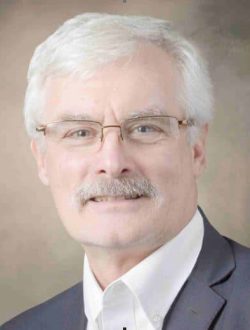 Prof. Robert H. Caverly received his Ph.D. degree in electrical engineering from The Johns Hopkins University, Baltimore, MD, in 1983. He has been a faculty member at Villanova University in the Department of Electrical and Computer Engineering since 1997 and is a Professor Emeritus. Previously, he was a Professor at the University of Massachusetts Dartmouth. Dr. Caverly’s research interests are focused on the characterization of semiconductor devices such as PIN diodes and FETs in the microwave and RF control environment for communication and biomedical applications. He has published more than 200 journal, conference and editorial papers, and is the author of the books Microwave and RF Semiconductor Control Device Modeling and CMOS RFIC Design Principles, both from Artech House. An IEEE Life Fellow, Dr. Caverly is currently the Editor in Chief of the IEEE Microwave Magazine.
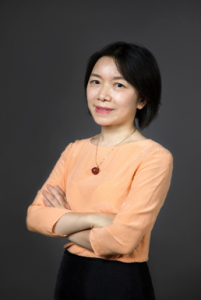 Prof. Wenquan Che
received the PhD degree from the City University of Hong Kong (CITYU), Hong Kong, China, in 2003. From 2007 to 2008, she conducted academic research as a Humboldt Fellow with the Institute of High Frequency Technology, Technische Universität München, Munich, Germany. She had been with Nanjing University of Science and Technology as a lecturer, associate professor, and professor since 1995. In Oct. 2018, she joined South China University of Technology as a full professor. She has authored or coauthored over 350 internationally referred journal papers and over 150 international conference papers. Her current research interests include microwave and millimeter-wave circuits and systems, antenna technologies, etc.
Dr. Che has been an IEEE Fellow since 2022 and has been an Elected Member of the IEEE MTT-S AdCom (2018-2026). She was a recipient of the 2007 Humboldt Research Fellowship presented by the Alexander von Humboldt Foundation of Germany, the 5th China Young Female Scientists Award in 2008, and the Distinguished Young Scientist Award by the National Natural Science Foundation Committee of China in 2012. She had been the Editor-in-Chief of Microwave and Optical Technology Letters (2019-2025), and a reviewer for several IEEE Transactions and journals. She is currently an associate editor of the IEEE Journal on Wireless Power Technologies.
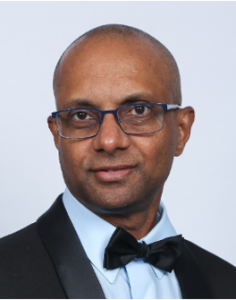
Professor Karu Esselle (FRSN, FIEEE, FIEAust) is Distinguished Professor in Electromagnetic and Antenna Engineering at the University of Technology Sydney. A large collection of awards Karu recently received include Academic Research Team of the Year (Team Leader) at 2025 Australian Space Awards, 2024 Premier’s Prize for Leadership in Innovation in New South Wales, Australia’s national 2023 Eureka Prize for Outstanding Science in Safeguarding Australia (Team Leader), Australia’s national 2022 Professional Engineer of the Year, both the most prestigious space award in Australia – the “Winner of Winners” Excellence Award – as well as the Academic of Year Award at the 2022 Australian Space Awards, 2022 UTS Chancellor’s Medal, both the Excellence Award and the Academic of the Year Award at 2021 Australian Defence Industry Awards, and 2019 Motohisa Kanda Award (from IEEE USA) for the most cited paper in IEEE Transactions on EMC in the past five years.
Karu is a Fellow of the Royal Society of New South Wales, IEEE, and Engineers Australia. He has authored over 750 research publications, and his papers have been cited over 18,000 times. His h-index is 66. Karu is among the top 0.3% of active researchers in the world in the research area of Networking and Telecommunications, according to a career-long research impact analysis published in Elsevier, which considered only actively publishing researchers in this field.
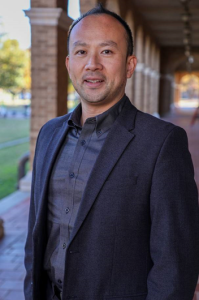
Professor Changzhi Li is the Whitacre Endowed Chair in Electrical and Computer Engineering at Texas Tech University. His research interests are microwave/millimeter-wave technologies for healthcare, security, energy efficiency, structural monitoring, and human-machine interface. Dr. Li is the Editor-in-Chief of the IEEE Transactions on Microwave Theory and Techniques. He was an IEEE Microwave Theory and Techniques Society (MTT-S) Distinguished Microwave Lecturer, in the Tatsuo Itoh class of 2022-2024 and the General Chair of the 2024 IEEE Radio Wireless Week (RWW) in San Antonio, TX. He was a recipient of the IET A F Harvey Prize, the IEEE MTT-S Outstanding Young Engineer Award, the IEEE Sensors Council Early Career Technical Achievement Award, the ASEE Frederick Emmons Terman Award, the IEEE-HKN Outstanding Young Professional Award, and the NSF Faculty CAREER Award. Dr. Li is a Fellow of the IEEE, the National Academy of Inventors (NAI), and the American Institute for Medical and Biological Engineering (AIMBE).
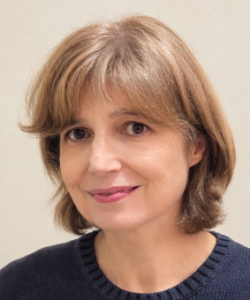 Professor Almudena Suárez received the Ph.D. degree in Physics from the University of Cantabria, Santander, Spain, in 1992, and the Ph.D. degree in Electronics from the University of Limoges, France, in 1993. She is currently a Full Professor at the University of Cantabria, Spain. She served as an IEEE Distinguished Microwave Lecturer from 2006 to 2008 and has been an IEEE Fellow since 2012. She is the author of the book Analysis and Design of Autonomous Microwave Circuits (IEEE-Wiley, 2009) and co-author of Stability Analysis of Nonlinear Microwave Circuits (Artech House, 2003). She was an Invited Visiting Professor at the California Institute of Technology (Caltech) from 2004 to 2005. She served as a member of the Board of Directors of the European Microwave Association from 2012 to 2020 and as Editor-in-Chief of the International Journal of Microwave and Wireless Technologies (Cambridge University Press) from 2013 to 2018. In addition, she served as Coordinator of the Communications and Electronic Technology Area at the Spanish National Evaluation and Foresight Agency from 2009 to 2013. In 2021, she received the Research Award from the Social Council of the University of Cantabria. In 2025, she received the IEEE MTT-S Distinguished Educator Award. She also served as Editor-in-Chief of IEEE Transactions on Microwave Theory and Techniques from 2023 to 2025.
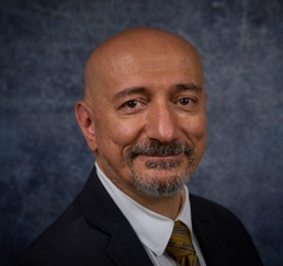
Professor Cristiano Tomassoni received his Ph.D. in Electronics Engineering from the University of Perugia, Perugia, Italy, in 1999. In the same year, he joined the Lehrstuhl für Hochfrequenztechnik, Technical University of Munich, Munich, Germany as a Visiting Scientist, where he worked on the modeling of waveguide structures and devices using the generalized scattering matrix technique. In 2001, he was a Guest Professor at the Fakultät für Elektrotechnik und Informationstechnik, Otto-von-Guericke University, Magdeburg, Germany. In the early stages of his career, he contributed to the enhancement of several analytical and numerical methods for electromagnetic component simulation, including the finite-element method, mode-matching technique, generalized multipole technique, method of moments, transmission-line matrix, and mode matching applied to spherical waves. In 2001, he joined the University of Perugia, where he is currently an Associate Professor and teaches the ‘Electromagnetic Fields’ course and the ‘Advanced Design of Microwave and RF Systems’ course. His main research interests include modeling and designing of waveguide components and antennas, miniaturized filters, reconfigurable filters, dielectric filters, and substrate integrated waveguide filters. He is currently studying the use of Additive Manufacturing (AM) technology for the fabrication of microwave components, considering various technologies such as Stereolithography (SLA), Lithography-based Ceramic Manufacturing (LCM), Selective Laser Melting (SLM), Fused Deposition Modeling (FDM), and PolyJet technology. Prof. Tomassoni has been elevated to the grade of IEEE Fellow, Class of 2025. He serves as the Chair of the MTT-5 Filters Technical Committee of the IEEE MTT-S. Currently, he is a Distinguished Lecturer for the IEEE MTT-S. From 2018 to 2022, he served as an Associate Editor for the IEEE Transactions on Microwave Theory and Techniques. Prof. Tomassoni is also the recipient of the 2012 Microwave Prize, awarded by the IEEE Microwave Theory and Techniques Society.
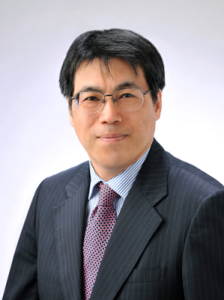 Professor Naoki Shinohara received the B.E. degree in electronic engineering, the M.E. and Ph.D (Eng.) degrees in electrical engineering from Kyoto University, Japan, in 1991, 1993 and 1996, respectively. He was a research associate in Kyoto University from 1996. From 2010, he has been a professor in Kyoto University. He has been engaged in research on Solar Power Station/Satellite and Microwave Power Transmission system. He is a Fellow of IEEE and URSI, IEEE MTT-S elected AdCom voting member (2022-2027), IEEE MTT-S Technical Committee 25 (Wireless Power Transfer and Conversion) former chair and member, IEEE MTT-S Standard Committee chair, IEEE MTT-S Broaden Participation Committee (BPC) member, IEEE MTT-S MGA (Member Geographic Activities) Region 10 regional coordinator, IEEE WPT Initiative member, IEEE Wireless Power Transfer Conference & Expo founder and Steering committee member, URSI commission D (Electronics and Photonics) former chair, the first chair and technical committee member on IEICE Wireless Power Transfer in Japan, Japan Society of Electromagnetic Wave Energy Applications former president and adviser, Space Solar Power Systems Society president, and was IEEE MTT-S Distinguish Microwave Lecturer (2016-18). He was the recipient of the 2025 IEEE Microwave Magazine Best Paper Award, the 2023 IEEE Journal of Microwaves Best Paper Award, the 2022 Award of Minister of Education, Culture, Sports, Science and Technology in Japan, and the 2023 IEICE Achievement Award in Japan, etc. His supervised students were the recipient of 100 awards from 2011 to 2025. He has been author of over 150 reviewed journal papers, over 130 keynotes and invited speakers in international conferences, and over 120 the other invited speakers including 55 DMLs. He has collaborated with totally over 150 companies for the WPT and microwave applications in 30 years. He is the co-inventor of 35 patents and 20 submitting patents. He has worked to harmonize academia and industry of the WPT. He organizes Wireless Power Transfer Consortium for Practical Applications (WiPoT), and Wireless Power Management Consortium (WPMc) in Japan as a chair from 2013 with over 40 companies to establish the WPT market and to encourage the WPT business. His books are “Wireless Power Transfer via Radiowaves” (ISTE Ltd. and John Wiley & Sons, Inc., 2014), “Recent Wireless Power Transfer Technologies Via Radio Waves (ed.)”, (River Publishers, 2018), “Far-Field Wireless Power Transfer and Energy Harvesting”, (Artech House, 2022), “Theory and Technology of Wireless Power Transfer: Inductive, Radio, Optical, and Supersonic Power Transfer” (CRC Press, 2024), and “Wireless Power Transfer: Theory, Technology, and Applications (2nd Edition) (ed.)” (IET, 2018 and 2014), and some English, Japanese, and Chinese translated text books of WPT.
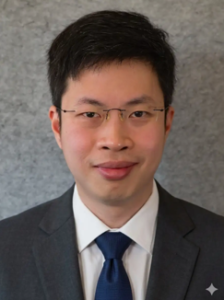
Prof. Withawat Withayachumnankul is a Professor at Adelaide University and the Founding Leader of the Terahertz Engineering Laboratory. An ARC Future Fellow and a Fellow of both the IEEE and Optica, his research programs focus on terahertz integration, metasurfaces, antennas, communications, and radar systems. He currently leads a research group of approximately 15 PhD students and postdoctoral researchers and has maintained a long-standing collaboration as a Visiting Researcher at Osaka University since 2017. His scholarly work includes over 130 journal publications, and his contributions have been recognised with the IRMMW-THz Society Young Scientist Award (2020) and the National Measurement Institute Barry Inglis Medal (2024). Professor Withayachumnankul demonstrates extensive service to the engineering community, notably serving on the ARC College of Experts and as a Track Editor for the IEEE Transactions on Terahertz Science and Technology.
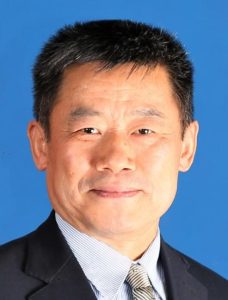
Professor Qing-Xin Chu (M’99–SM’11-FM’19)is the professor with the School of Electronic and Information Engineering, South China University of Technology, the founder of IEEE Guangzhou AP/MTT Chapter, the vice-chair of Chinese Institute of Electronic (CIE) Antenna Society, the vice-chair of CIE Propagation Society, IEEE Fellow and CIE Fellow. He has published two books, more than 470 papers in journals and more than 460 papers in conferences, in which several papers were selected in ESI high cited papers. He has been elected as the highly cited scholar by Elsevier since 2014. And Global Lifelong Science Influence List in 2024. He has authorized more than 120 invention patents of China. He was the recipient of the Science Awards by CIE in 2018 and 2016, the Science Award by Guangdong Province of China in 2013, the Science Awards by the Education Ministry of China in 2008 and 2002. His current research interests include antennas and microwave devices in wireless communication.
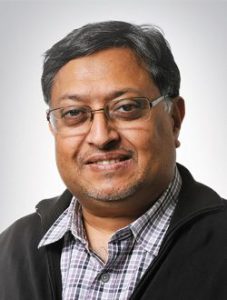 Dr. Imran Mehdi
Imran Mehdi (BSEE 1985, MSEE 1986 and Ph.D 1990, University of Michigan) is a Senior Research Scientist at the Jet Propulsion Laboratory, California Institute of Technology. He joined JPL in 1990 and is currently a Technical Group Supervisor leading research and development in submillimeter-wave/THz applications and instruments for space science. His responsibilities include developing THz components, technologies and subsystems for current and future NASA missions. These devices and components were implemented on the ozone-monitoring Microwave Limb Sounder (MLS) instrument which is still operational as well as the (Microwave Instrument on Rosetta Orbiter) MIRO instrument which represents the first submillimeter-wave receiver operational in deep-space. From 1999 he led the effort of developing broadband solid-state sources from 200 to 2500 GHz for the Heterodyne Instrument for Far Infrared (HIFI) on the Herschel Space Observatory, a cornerstone European Space Agency mission. He is an IEEE Fellow and served as the Editor in Chief for the IEEE Transactions on THz Science and Technology from 2019-2022. He is recipient of a number of NASA awards including the NASA Exceptional Technology Achievement Medal for developing advanced THz components and sub-systems. He currently leads the Submillimeter-Wave Advanced Technology group at JPL which is focused on developing space instruments for space exploration and discovery and have implemented complex instruments for airborne, balloon and space platforms. Dr. Mehdi has over 100 publications and is an elected member of the IEEE-Microwave Theory and Techniques Administrative Committee (AdCom, 2023-2028). He is the Chair of the Publication Committee of MTT-S overseeing the publication portfolio of the MTT-S. He also serves as a Senior Editor for IEEE Access as well as a board member for the Editorial Board of IEEE Access. His current interests include millimeter and submillimeter-wave devices and technology, nanotechnology, high-frequency space instrumentation, 3D Submm-wave systems, and development of compact, low-power heterodyne receiver arrays for deep-space missions.
Title: Sources and Detectors for Space THz Communication Systems
Abstract: THz applications have been increasing over the years. These applications include both space-based remote sensing as well as ground-based industrial applications such wireless communications. For communication systems, the THz frequency range is attractive as it provides larger bandwidth and smaller apertures. This talk will focus on the recent advancement in the development of room-temperature based wideband, compact sources and detectors in the THz range for space communication systems.
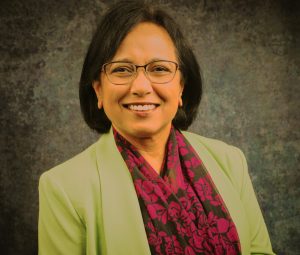 Dr. Debabani Choudhury
Dr. Debabani Choudhury is the Founder and CEO of SeraTech-LLC, contributing to Technologies and system innovations spanning GHz to optical frequencies for the communication and sensing applications. She led the strategy and vision for GHz to subTHz research and advancements for Intelsystems and applications while serving as Senior Technologist and Research Director at Intel Research Labs. She formerly developed technology for space, defense, and automotive applications at Hughes Research/HRL Labs, Millitech, and NASA Jet Propulsion Laboratories (JPL). Dr. Choudhury is an IEEE Fellow with more than 150 patents and patent applications, as well as author of multiple publications. She received several Gordon Moore Awards from Intel for her outstanding research contributions. She also received several NASA recognition awards and is a recipient of the IEEE Solid State Society’s JSSC Best Journal paper award. Dr. Choudhury holds an elected ADCOM seat for IEEE MTT-Society. She chaired and served as member for several MTT-S ADCOM committees, plus four MTT-S technical committees (TCs). She served as the Chair of MTT-S Future Directions Committee and also currently Chairs the MTT-S Broadening Participation Committee (BPC). She is currently the member of IEEE TAB BP initiative. She guest-edited multiple IEEE journals, like T-MTT, Proceedings of IEEE. Dr. Choudhury sat on the IEEE 5G-Initiative Committee with ComSoc. She launched MTT-S and ComSoc teamwork for 5G Summits at IEEE IMS2017 as chair. She co-chaired TPCs for IEEE IMS2021 and RWS2013. She also co-chaired the IEEE 5G-World Forum TPCs in 2018 and 2019. She is the member of IEEE Antennas and Propagation AP-S technical committee and member of two IEEE TAB EIE committees also.
Title: Diverse Semiconductor Integrated Microelectronics in the Application-Oriented AI Era
Abstract: Energy efficient materials, devices, technologies and systems will play a major role with the evolution of sensing and communication network architectures in the AI era. The progress in compound semiconductor devices combined with silicon technologies and 3D heterogeneous integration (3DHI) are defining the microelectronics future in the industry.
This talk will present the recent advancements in semiconductor and microelectronics integration technologies. The challenges and opportunities of the system-oriented compound semiconductor-based microelectronics in the Agentic AI era will also be discussed.
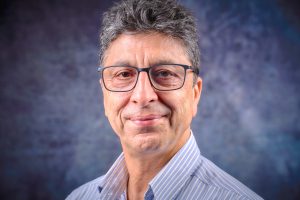 Kamran Ghobani
Kamran Ghorbani received the B.Eng (Hons.) and PhD degrees from RMIT University, Melbourne, VIC, Australia, in 1994 and 2001, respectively.
From Nov. 1994 to 1996, he was a graduate RF Engineer at AWA Defence Industries, working on early-warning radar systems. In June 1996, he joined RMIT University to pursue his PhD studies. From Dec. 1999 to March 2001, a Senior RF engineer at Tele-IP worked on VHF transceivers for commercial aircraft. He joined the Department of Communication and Electronic Engineering (now the School of Engineering) at RMIT University in 2001 as a continuing Academic.
Prof. Ghorbani is the leader of the RF & Antenna research group at RMIT University. He is responsible for strategic planning and managing the research group. His research interests include multifunctional microwave structures, microwave sensors, radar systems, metasurfaces, and phased array antennas. He has published more than 280 papers in journals and conference proceedings and has held numerous government and industry grants, both nationally and internationally. He is a fellow of IEEE.
Volunteer activities:
* IEEE MTT-S elected AdCom member, 2017-present
* IEEE MTT-S Treasurer, 2023-present
* IEEE MTT-S MGA Committee Chair, 2018-2019
* Associate Editor, IEEE Transactions on Microwave Theory and Techniques, 2015-2019
* Associate Editor, IET Microwave, Antennas and Propagation, 2014-2018.
* General Chair, Asia Pacific Microwave Conference APMC2011.
* Technical Program Committee Chair, Asia Pacific Microwave Conference APMC2016.
* Chair, International Symposium on Radio-Frequency Integration Technology RFIT, 2018 and 2023.
* Chair and Founder, 1st Australian Microwave Symposium AMS2014.