
An Inter-Society Technology Panel
IMWS-AMP 2026 is pleased to invite all IMWS-AMP attendees to meet and discuss publication questions with the editors of journals published by the IEEE MTT-S and AP-S. This is an excellent opportunity to have all of your questions answered about the publications of these two IEEE Societies. The panelists include Changzhi Li (Editor in Chief, IEEE Transactions on Microwave Theory and Techniques), Christophe Fumeaux (Past Editor in Chief, AWP Letters; 2025 AP-S President; AP-S Vice-President of Publications), Imran Mehdi (MTT-S Chair of Publications and past Editor in Chief of T-THZ), Karu Esselle (Past Associate Editor, IEEE Transactions on Antennas and Propagation; Past Senior Editor, IEEE Access) and Robert Caverly (Editor in Chief, IEEE Microwave Magazine). The interactive panel will help authors and potential authors understand the publication process, hints and tips on ensuring authors choose the correct publication, and news on recent changes to, as well as understanding of, the IEEE publication process. It will also be a great opportunity for attendees and young researchers to discuss challenges and opportunities in addition to guidance for future manuscript submissions.
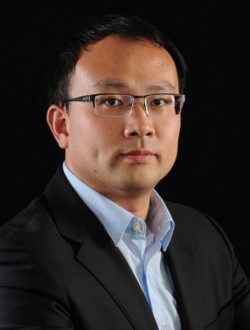 Changzhi Li (Editor in Chief, IEEE Transactions on Microwave Theory and Techniques).
Changzhi Li is a Professor in the Department of Electrical and Computer Engineering at Texas Tech University, where he also serves as the Associate Academic Dean of Research and Graduate Programs. He is the Editor-in-Chief of the IEEE Transactions on Microwave Theory and Techniques for the 2026–2028 term. He earned his B.S. in electrical engineering from Zhejiang University in 2004 and his Ph.D. from the University of Florida in 2009.
Li’s primary research focuses on radio frequency and analog circuits, specifically applying microwave and millimeter-wave sensing to physical and biological measurement challenges. His laboratory develops portable radar sensor technologies utilized in non-contact healthcare monitoring, structural health assessment, and wireless human-machine interfaces. His methodologies bridge foundational electromagnetic theory with practical CMOS system-on-chip integrations and digital signal processing.
Recognized for his engineering contributions, Li holds Fellow status in the IEEE, the National Academy of Inventors, and the American Institute for Medical and Biological Engineering. His achievements have been acknowledged with the National Science Foundation Faculty Early CAREER Award, the IEEE MTT-S Outstanding Young Engineer Award, and the IEEE Sensors Council Technical Achievement Award. In his editorial capacity, he oversees the peer-review process and technical publication standards for the discipline’s primary journal.
 Christophe Fumeaux (Past Editor in Chief, AWP Letters; 2025 AP-S President; AP-S Vice-President of Publications)
Christophe Fumeaux is the Chair Professor in Optical and Microwave Engineering at the School of Electrical Engineering and Computer Science, The University of Queensland, a position he assumed in 2023. Prior to this, he served as a Professor at The University of Adelaide from 2008 to 2023. He earned his Diploma and Ph.D. degrees in physics from ETH Zurich, Switzerland, in 1992 and 1997, respectively. Following his doctoral studies, he held positions at the University of Central Florida, the Swiss Federal Office of Metrology, and ETH Zurich.
Professor Fumeaux’s principal research interests encompass applied electromagnetics, antenna engineering, and the implementation of radio-frequency design principles across the broader electromagnetic spectrum. His scientific contributions have been widely recognized; he was a Future Fellow of the Australian Research Council and received honors including the ETH Medal, the Edward E. Altshuler Prize, and best paper awards from the IEEE Sensors Journal and ACES Journal.
A leader within his professional community, Professor Fumeaux is an IEEE Fellow. He served as the Editor-in-Chief for the IEEE Antennas and Wireless Propagation Letters from 2017 to early 2023. He currently serves as the 2025 President of the IEEE Antennas and Propagation Society and its Vice-President of Publications.
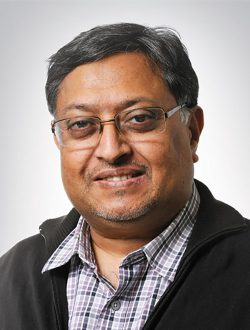 Imran Mehdi (MTT-S Chair of Publications and past Editor in Chief of T-THZ)
Imran Mehdi is a Senior Research Scientist and Group Supervisor at the Jet Propulsion Laboratory (JPL), California Institute of Technology, where he leads research in submillimeter-wave applications for space exploration. He earned a B.A. from Calvin College in 1983, followed by a B.S.E., M.S.E., and Ph.D. in Electrical Engineering from the University of Michigan, Ann Arbor, completing his doctoral studies in 1990. Upon joining JPL that same year, he concentrated his work on developing terahertz components, technologies, and subsystems for NASA missions.
Dr. Mehdi’s contributions include the implementation of submillimeter-wave devices on the Microwave Limb Sounder and the MIRO instrument aboard the Rosetta Orbiter. He also directed the development of broadband solid-state sources for the Heterodyne Instrument for the Far Infrared on the Herschel Space Observatory. His current research focuses on super-compact heterodyne receiver arrays for future deep-space astrophysics and planetary missions.
Within the professional community, Dr. Mehdi is an IEEE Fellow. He served as the Editor-in-Chief for the IEEE Transactions on Terahertz Science and Technology from 2019 to 2022. Currently, he is an elected member of the IEEE Microwave Theory and Technology Society Administrative Committee and serves as the MTT-S Chair of Publications for the 2025–2026 term, advancing instrumentation.
 Karu Esselle (Past Associate Editor, IEEE Transactions on Antennas and Propagation; Past Senior Editor, IEEE Access)
Karu Esselle is a Distinguished Professor in Electromagnetic and Antenna Engineering at the University of Technology Sydney and a Visiting Professor at Macquarie University. He received his B.Sc. in electronic and telecommunication engineering from the University of Moratuwa, Sri Lanka, and his M.A.Sc. and Ph.D. degrees in electrical engineering from the University of Ottawa, Canada.
His research focuses on applied electromagnetics, antenna engineering, wireless communication technologies, and metasurface design. Notably, he directed the team that designed the high-gain antenna system for the Audacy Zero Ka-band CubeSat, launched in 2018. His scientific contributions have resulted in extensive publications and sustained external research funding across national and international platforms.
Professor Esselle is a Fellow of the IEEE, Engineers Australia, and the Royal Society of New South Wales. He was recognized as Australia’s Professional Engineer of the Year in 2022. Within the IEEE, he chaired the Antennas and Propagation Society Distinguished Lecturer Program Committee from 2018 to 2020. His editorial service includes tenures as an Associate Editor for the IEEE Transactions on Antennas and Propagation and as a Senior Editor for IEEE Access. Previously, he served as Associate Dean of Higher Degree Research at Macquarie University.
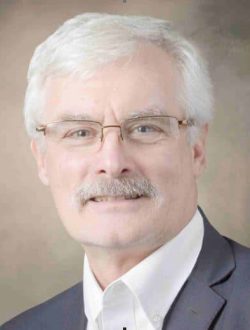 Robert Caverly (Editor in Chief, IEEE Microwave Magazine)
Robert H. Caverly is an Emeritus Professor in the Department of Electrical and Computer Engineering at Villanova University, where he served as a full professor from 1997 until his transition to emeritus status in 2024. Prior to joining Villanova, he was a faculty member at the University of Massachusetts Dartmouth for over fourteen years. He received his bachelor’s and master’s degrees in electrical engineering from North Carolina State University, followed by his Ph.D. in electrical engineering from The Johns Hopkins University in 1983.
Dr. Caverly’s research focuses on the characterization and modeling of semiconductor devices, particularly PIN diodes and field-effect transistors, operating within microwave and radio frequency control environments. His work has significant applications in modern communication systems, reconfigurable networks, and magnetic resonance imaging scanners. He has published over one hundred journal and conference papers across technical and pedagogical domains. Furthermore, he authored the textbooks “CMOS RFIC Design Principles” and “Microwave and RF Semiconductor Control Device Modeling.”
Recognized for his engineering contributions to the modeling and design of radio frequency switching devices, Dr. Caverly was elevated to IEEE Fellow in 2013 and became an IEEE Life Fellow in 2020. He currently serves as the Editor-in-Chief of the IEEE Microwave Magazine.